Archive for the “Complete Theaters” Category
If you're new here, you may want to subscribe to my RSS feed. Thanks for visiting! Let’s say you’re not quite satisfied with the 37-inch flat-screen TV you bought a few years back. You’re looking for something a little bit more impressive, a system to give you that gasp-inducing, jaw-dropping, toe-curling movie theater experience. Maybe it’s time for your own home theater.
What kind of equipment to buy depends on your budget, how much time you have on your hands, your technical prowess and - of course - how much you tend to drool over the latest high-tech gizmos. Those inclined toward do-it-yourself projects can buy a high-definition set or projector, hook it up to a DVD player and surround-sound system for $3,000 or less.
But if money is no object, you can get your home cinema professionally designed, acoustically engineered, installed and tricked out to look like a real movie theater … for $25,000 and up. Like luxury cars or motorboats, there’s practically no upper limit for those with money to spend. Read the rest of this entry »
No Comments »
We all love to go to the movie theater to relax after a long day of work. Even if you need to tide traffics jams to go to the movie theater, you are willing to endure this to be able to watch a movie. The sight and sound of a movie theater is what makes us go back there every so often. We easily get lost in the movie scene because of the bigger than life pictures and surround sound that takes you there beside the characters in the movie. This may prove to be costly in the end but we continue to do this because we love to go to movie theaters and see movies. If you can bring home a movie theater, it will be good and I am sure you will love the idea. However, before you say no, think again. Going to the movie theaters every single day is definitely costly in the long run. Additionally, if you know the basic components of a home movie theater, you may not think twice and will definitely leave right now to acquire your own home movie theater.
A complete setup of a movie theater in a big room is definitely only accessible to the rich and the famous. However, if you have meager budget, you can have the home movie theater for yourself knowing the basic components and setting up the home movie theater in a smaller room. You may convert you den to a home theater room. You only need the three basic components and you may already enjoy watching movies with no limit.
If you have a television set, which I know you do, that is about 27 inches, you run away spending for the first major component of your home movie theater. The second major component, which I think you have, is the DVD player. If your DVD Player has progressive scan that is wonderful, however, even without progressive scan, your DVD player may work as the second component for your home movie theater. The final piece of the puzzle, which I want you to spend on, is the home theater speakers. You need three high-quality home theater speakers for your home movie theater. You need to place one on the right side, one on the left side and one on the rear center of the room. These are the three basic components of your home movie theater. You may now start enjoying unlimited movie and enjoy watching movies with your whole family. I am sure you will agree with me that this is the best part of owning your own home movie theater.
The set up for your home movie theater with the three basic components is the best perfect setup for small rooms. However, if you have a bigger room for your home movie theater, I am sure you have a bigger budget for your home theater. Then you may want to consider the recommendation of home theater experts, you may add more speakers up to six home theater speakers and may need to compliment it with subwoofer to maintain the surround sound effect for your home movie theater. If you want a bigger picture, you may want to consider buying a home theater projector. You may also acquire home theater seating and television cabinet if you want to compliment the home theater design to make up a complete package for your home entertainment. All these additions to the basic components may be necessary if you have a bigger room. If the room is smaller, then you may only need the three basic components for your home movie theater.
Having to be able to bring home the sight and sound you run after in movie theaters may be very efficient and less costly. Aside form the fact that you enjoy life with your family beside you watching movies after movies in your very own home movie theater.
No Comments »
I have always respected Harmon Kardon and they just came out with a lower end (for them anyway) home theater system that will be a thrill to hear.
Harman Kardon has put in a good effort to bring out their Home Theatre range. The HS 300 and the HS 500 seem to be winning hearts ever since they first showed up on the company’s site. Both systems boast a 5.1-channel receiver/DVD-Audio/Video player. In addition to this it also has five satellites and a subwoofer. Additionally, there’s HDMI connectivity. With 1080i video processing and USB connection to other players, are fantastic entertainment systems that are maid to drive your senses and give you a theatrical experience in the confines of your living room. At the end of the day, Harman Kardon has made it a success in the home theatre arena. It’s only a matter of time until we know how much of a best seller this is.
No Comments »
I ran across this very detailed and complete guide to setting up your home theater over at about.com. It is very important to have a plan when you are setting up as well as when you are buying the components for your home theater.
Think of source components, such as a DVD player, as the beginning point, and your television and loudspeakers as your end point. You have to get the video signal from your source component to your television or video display, and the audio signal to your loudspeakers.
Home Theater Set-up Example
In a basic setup that includes an television, AV receiver, a DVD player, and a VCR (or DVD recorder), here is an example of one approach:
Difficulty: Average
Time Required: 1.5 Hours
What You Need:
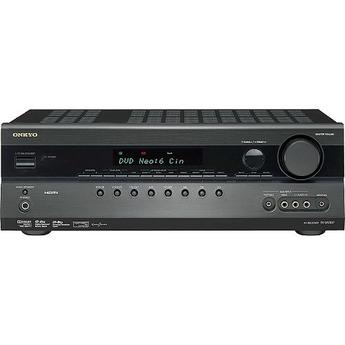
Home Theater Receiver
Television or Video Projector (and screen)
DVD Recorder and/or VCR
CD or DVD/CD Player
Loudspeakers
Subwoofer
All Needed connection cables and speaker wire
A Sound Meter
Here’s How:
Connect your satellite, cable, or antenna to your VCR (or DVD recorder) and then to the television. This will allow both your television and your VCR (or DVD recorder) to be able to receive broadcast, cable, or satellite signals, depending on what service you have.
NOTE: If you have both a VCR and DVD recorder, you should have the incoming cable, satellite, or antenna signal split and connected to them separately, not from one to the other.
Connect the audio and video outputs of your VCR or DVD recorder to your AV receiver’s VCR video inputs (if you have both a VCR and DVD recorder, use the AV receiver’s VCR1 connections for the VCR and the VCR2 connections for the DVD recorder).
In turn, connect the AV receiver’s VCR audio and video outputs to the audio and video inputs of your VCR. This will allow your VCR or DVD recorder to record video signals that come through the AV receiver or to play back tapes or DVDs for viewing on your television.
NOTE: Where you have both a VCR and DVD recorder connected to the AV receiver, you can dub non-copyprotected video tapes and DVDs between the two units via the AV receiver.
Connect one of the video outputs of your DVD player to the DVD player video input on your AV Receiver. In addition, also connect the digital optical or digital coaxial audio connection to your AV receiver. In order to access digital surround sound, you must make use of the DVD player’s digital audio connections.
Read the rest of this entry »
No Comments »
Geoffrey Morrison over at Home Theater Magazine has written a great article about home theater lies and It can stand by itself. I would like to add a few comments on how I feel about the article and each of the comments that he makes.
No matter what type of display you’re looking for, you’re no doubt going to be comparing the specs and feature lists of each. Things like contrast ratio, lumens, 3:2 pull down, and others are a marketing departments favorite tools to make their product sound better than another. Take many of these with a grain of salt. Take others as an undersold but vital aspect of a product. To sort though them, here’s what they all mean.
Contrast ratio
I agree with him here that Contrast ratio is a spec that we do not have to worry about. When you are in a stereo store you can compare high and low contrast ratios and I am sur that your HDTV will have more important quality issues than what the contrast ratio is.
Lumens
The number of lumens is the measurement of the brightness of the projector overall. In general you will want a projector with a higher number of lumens as you will want a brighter picture. The only way to compare lumens is to look at the projectors of one company and if you are looking at a projector from another company make sure you know what the relation is between the two comapnies as far as the lumen level is concerned.
Anything called “Edge Enhancement”
Edge enhancement is a sharpness level that apparently will make edges of things on the screen sharper and not so soft. There is usually a very bad payour in that the picture dow not look nearly as smooth and you have jagged lines all over so I believe, as most other pros I think that this is a very bad feature to enable on your TV.
Anything to do with speakers
Speakers come from companies that always lie. Not that speaker companies are bad, but if your competitor is measuring a crazy amount of wattage for speakers then you really need to do the same. My home reciever puts out 70 watts per chann el which is fine but how many car stereos have a wattage of 500-1000 watts per speaker? The numbers tend to be a bit more fair in the home theater industry but I still find that the best way to compare speakers is to go out and compare the same DVD or CD with different speakers connected to the same amplifier, this is by far the very best way to compare home theater speakers.
Comb Filter
A comb filter is the way that a TV will interpret the sgnal coming through composite cables. More than likely you are using Component video (best) or s-video (second best) to connect your DVD player to your TV which mean that the fancy comb filter, good or bad just is not being used.
1080p vs 720p
Geoffrey says do not worry about 1080p as you can not see the difference between that and 720p and he is probably right today. In five years time we will probably care more about 1080p but right now even the video games are really only being created for 720p because it just takes too much to program for 1080p. Look at what you want and what your budget is and remember the quality that you get for 720p is the most important standard to worry about.
No Comments »
The next time you shop for a new television, odds are good you’ll buy a home-theater system as well.
The two often go hand in hand. Many people who come in for a TV take the additional step of adding a surround-sound system and other components, said Quintin Hammonds, assistant manager at Jerry’s Audio-Video in Phoenix.
The percentage of households with home theaters is rising. More than one-third — 36 percent — of American households now have home-theater systems, the Consumer Electronics Association reports. In January 2003, only 28 percent did. What’s behind the increase? Desire for the latest technology is one reason.
Also, increasing prices of movie tickets and concessions are causing more people to turn homeward for entertainment, said Jon Taylor, home-theater manager at a Best Buy in Phoenix. Additionally, prices for fancy electronics and speaker systems are coming down, making home theaters more affordable to all income levels.
“You don’t have to be rich to have a nice home theater,” Taylor said. You don’t have to have a dedicated room for a home theater, either. You can set up surround sound in nearly any room.
An entry-level system, a home theater in a box that provides surround sound for your existing television, can cost as little as $199. Typically used in dorm rooms, condos or bedrooms, these units lack the functionality of more expensive systems, he said.
For $3,500 to $6,000, you can get a flat-screen television, components including speakers, receiver and DVD player, and a remote control that will operate everything. Of course, you can spend even more to get a top-of-the-line system complete with pull-down screen, overhead projection system, theater seats with cup holders and special lighting.
Read the rest of this entry »
No Comments »
I found the following online newspaper article that should help you out in your home theater thinking from a newspaper in Buffalo. These tips are pretty basic but they are very important to know and remember when shopping for your home theater.
Don’t put your finger in that electrical socket!
Oh, wait, you already knew that. But here are a few other things you might not know about how not to treat your home-entertainment equipment:
• Do not plug your TV into the same circuit as your air conditioner, whether it’s sharing a power strip or plugged into different wall outlets on one side of a room. (It’s no coincidence that the TV picture dims every time the AC kicks into super-cool mode.)
• Do not buy a TV that’s too big, or small, for your room. For an HDTV, determine viewing distance by multiplying the screen size, measured diagonally, by 21/2. (Suggested viewing distance, then, for a 50-inch set, would be 10.4 feet.) For an analog TV, multiply the screen size by 3.
• Do not use the inferior composite or S-Video connections with your HDTV. (Use component video or HDMI.)
• Do not panic if your CD skips. Most likely, it’s just dirty. Clean with a lint-free cloth, wiping from the center to the edge - not in a circular motion. Some people use dish detergent or Windex, but a cloth and, if needed, a little water will work. If the disc still skips, it might have a scratch or gouge. Repair it with a Digital Innovations SkipDR Repair Kit www.digitalinnovations.com, about $30). If all your CDs skip, it could be that your player’s lens is dirty. Buy a CD cleaner with a brush attachment at your local electronics store.
Read the rest of this entry »
No Comments »
A new upgrade for home theater enthusiasts provides as many as eight listeners with the same surround-sound experience.
The new system is one of the first to apply “fuzzy logic” to audio, assigning rules to sound wave data and providing a processor with instructions so that it can prioritize information.
Home theaters have always had a tricky quirk: in an average-sized room, the best sound would go to the listener in the middle, and everyone else had to settle for special effects that could sound far away or out of place.
Now, following years of research into how humans perceive sound, audio engineers have infused a home-theater receiver with software that automatically detects room acoustics, speaker placement, and other information at eight unique locations and then processes the sound to give each listener the “sweet spot.”
Called MultEQ and developed by Chris Kyriakakis and his colleagues at Audyssey Laboratories, Inc., the technology is a product of research into “immersive audio” by Kyriakakis and others at the Integrated Media Systems Center (IMSC) at the University of Southern California, one of the National Science Foundation’s Engineering Research Centers.
The new technology arises from findings in audio signal processing, acoustics, and psychoacoustics and is based on the NSF-supported doctoral research of Kyriakakis’s one-time student, Sunil Bharitkar, and former IMSC Masters student Philip Hilmes. All three researchers are co-founders of Audyssey Labs and co-principal investigators on the research publications.
Read the rest of this entry »
No Comments »
Did you know that a good quality home theater system can now be had for well under a thousand dollars? If we already have a large enough television, it will cost even less!You may have to make your popcorn in the microwave, get your cold drink out of the fridge and settle for your favorite recliner chair instead of an uncomfortable cinema seat. You won’t have to put up with the chatting or cell phones of you fellow theater goers, but you can have all the fun and excitement of the home theater experience even if you are not yet one of the income earners.
Now, consider the time you spend going to and returning from the movie and how much you value it. Take that number and multiply it by the number of movies you usually like to see in a year. That is a pretty startling amount isn’t it! The one time purchase of a home theater system will eliminate most of those expenses. It may also require that you to buy a better quality television or stereo equipment than what you currently have. These better quality products will last longer; not requiring expensive replacement soon will be another area of savings.
A lot of us view a home theater system as being something for only the people with lots of money. We see the fun times at the theater, with tiered seating, plush chairs, curtains over the screen and popcorn, hot dogs and drinks in the lobby. It’s true that only those with plenty of cash (and space) can build their own version of the downtown theater in their home, but that doesn’t mean the rest of us have to suffer with a either going downtown to the theater or making do with the little television in the corner.
Read the rest of this entry »
No Comments »
|